
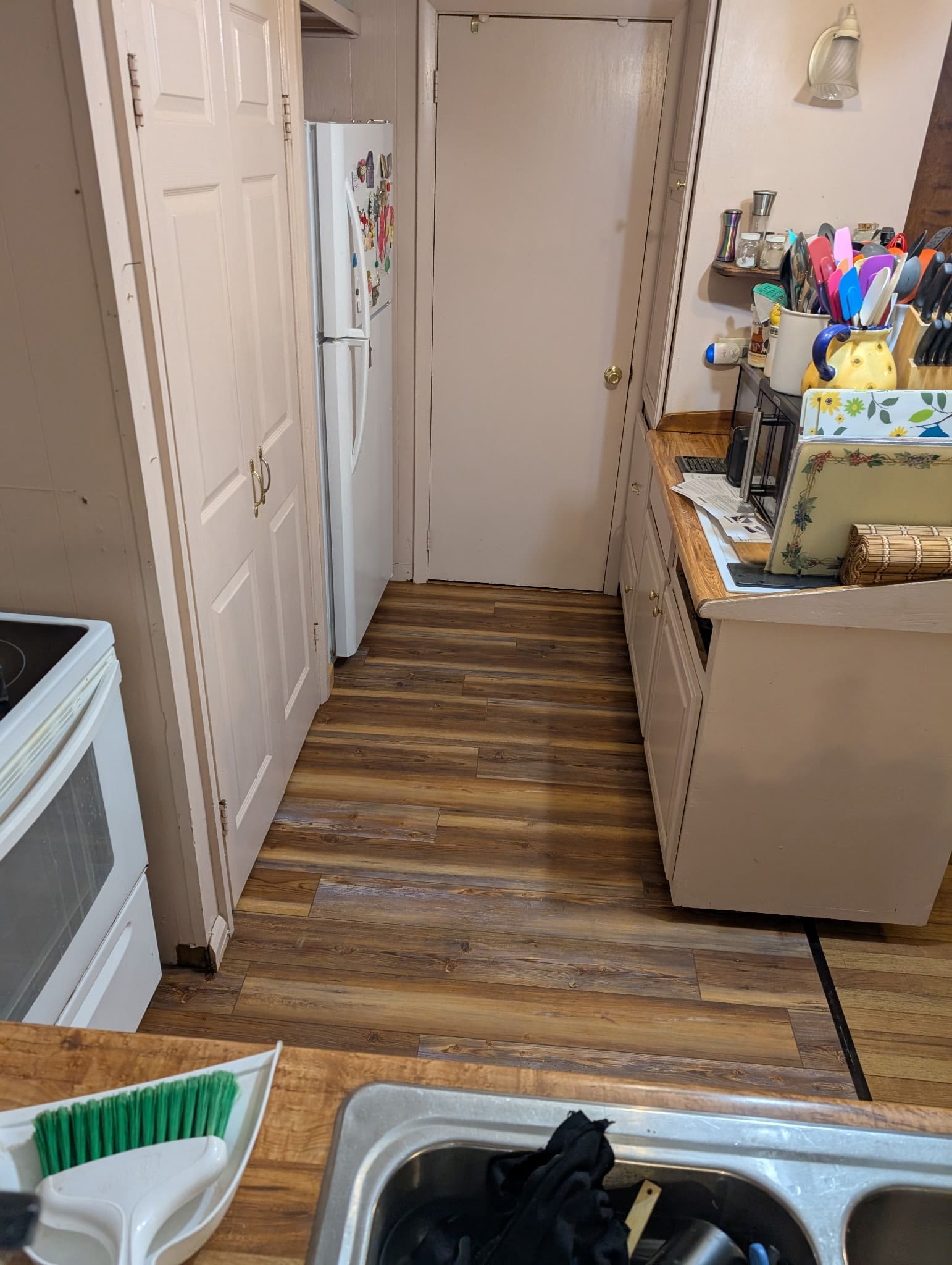
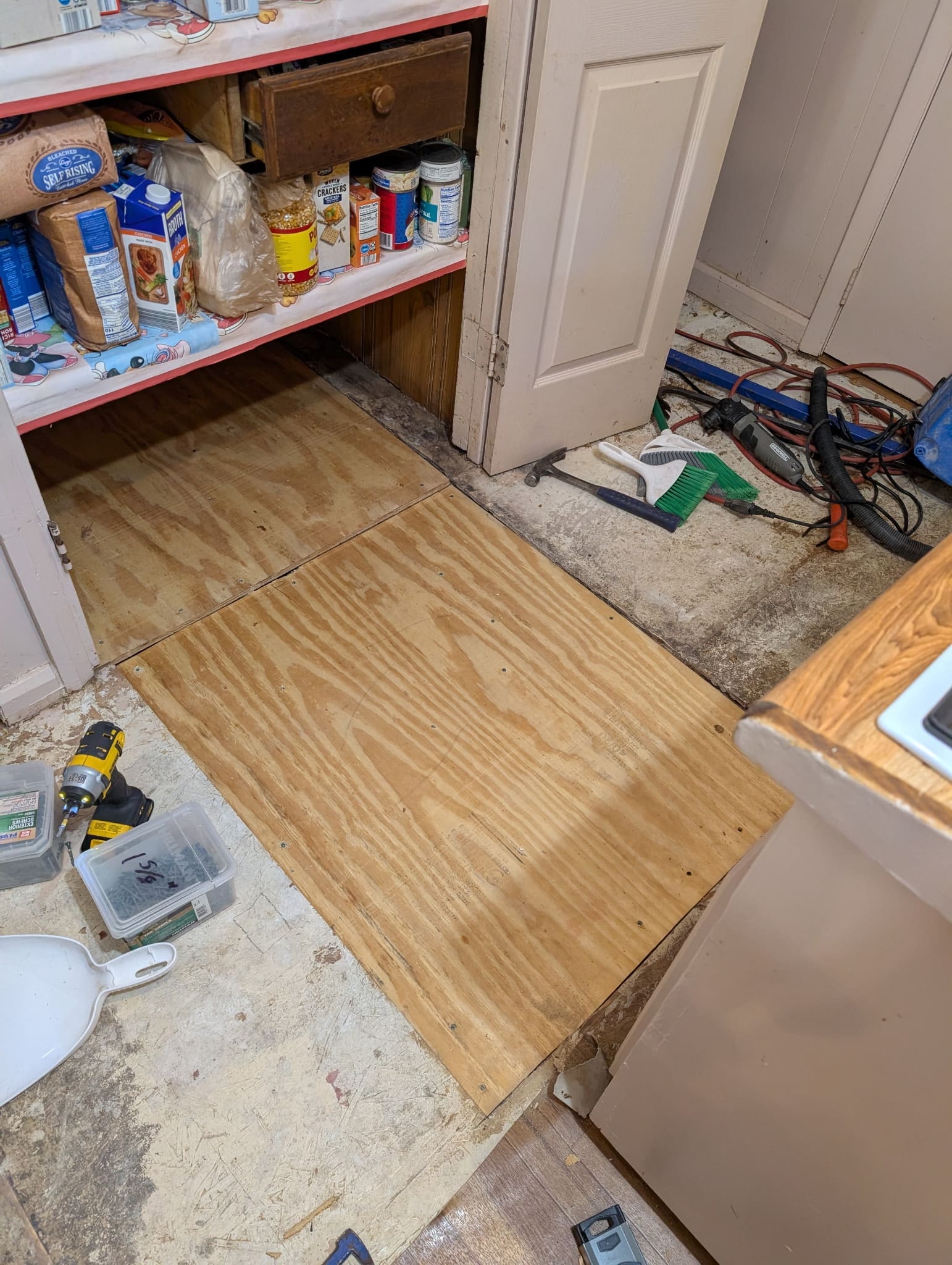
This project started with a problem that happens more often than most homeowners realize. A slow, hidden water leak behind the refrigerator went unnoticed for an extended period of time. By the time it was discovered, moisture had already worked its way into the subfloor. The result was rot, soft spots underfoot, and a kitchen floor that was no longer structurally sound.
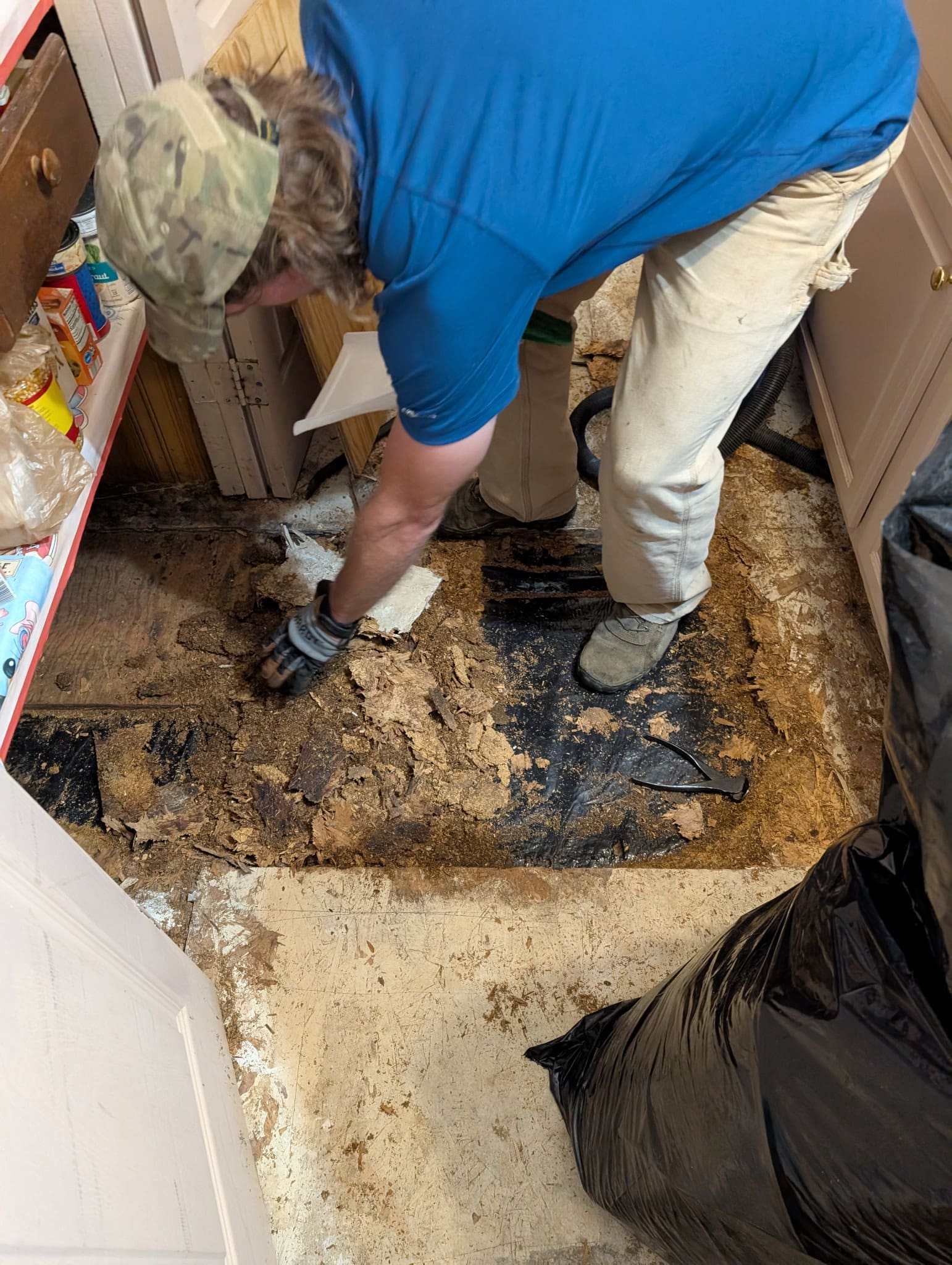
The first step was stopping the source of the water and assessing the extent of the damage. Once flooring was removed, it became clear that the issue went beyond surface materials. Sections of the subfloor were compromised and no longer able to properly support weight. Leaving this type of damage in place can lead to bigger problems, including uneven floors, mold growth, and continued structural deterioration.
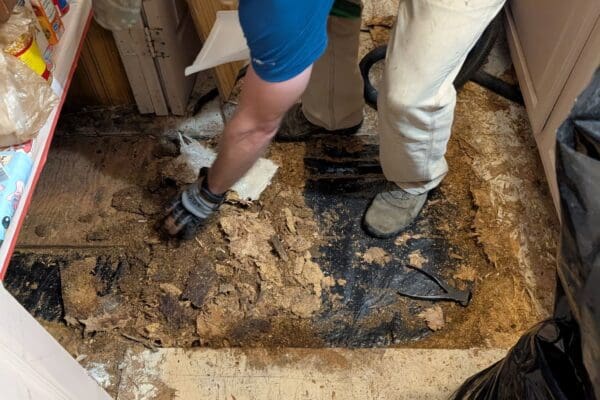
Our team removed all damaged flooring and cut back the subfloor to reach solid, dry material. Every area affected by moisture was cleaned out completely. This step matters. Covering over rot or soft wood only hides the problem and guarantees future failure. We take the time to remove what should not be there before rebuilding anything on top of it.
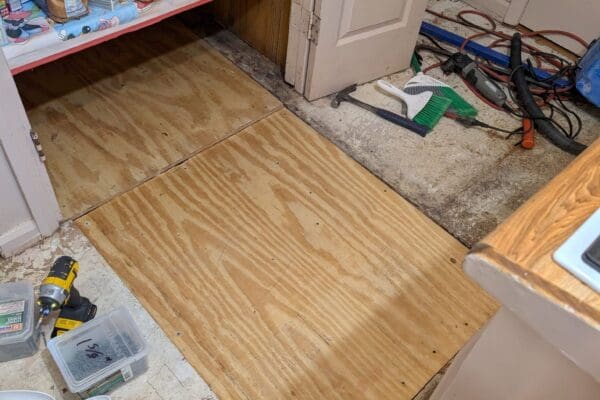
After demolition, new plywood subfloor panels were installed and securely fastened to restore strength and stability. The floor was carefully leveled to ensure a smooth transition between rooms. Proper fastening and alignment are critical, especially in smaller spaces like kitchens where appliances, cabinets, and foot traffic concentrate weight in specific areas.
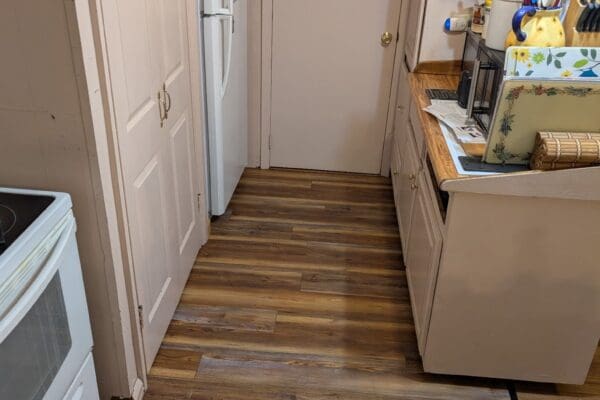
Once the structure was solid again, we moved into finishing the space. The homeowners chose a waterproof vinyl plank flooring, which is a smart option for kitchens and utility areas. Vinyl plank resists moisture, cleans easily, and holds up well to daily wear. It also provides a clean, finished look that works with a wide range of home styles.
The new flooring was installed with attention to transitions, spacing, and edge details so it would feel seamless within the existing kitchen. Even though this was a smaller project, the goal was the same as any larger renovation. Restore function first, then make it look like it was always meant to be there.
The finished result is a safe, solid kitchen floor that will hold up long term. There are no soft spots, no uneven areas, and no lingering moisture concerns. Most importantly, the underlying issue was addressed correctly rather than covered up. That is what protects the home and the homeowner’s investment.
Projects like this fall squarely under the kind of work we handle through our Home Renovations services. Not every renovation is a full remodel. Sometimes the most important work happens below the surface. Subfloor repairs, water damage cleanup, and structural fixes are essential to keeping a home healthy and functional.
This kitchen repair is a good example of how small problems can turn into major issues if ignored, and how the right approach can stop damage in its tracks. By addressing the cause, rebuilding the structure, and finishing with durable materials, we turned a failing floor into a reliable, long-lasting part of the home.